
How a shake-up in Senegal could strengthen Trump’s hand in the Sahel
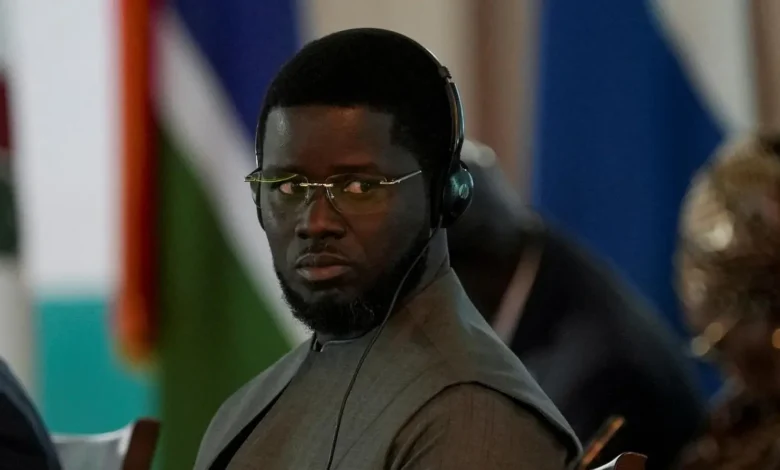
President Faye, who supports close cooperation with the west, is trying to sideline his fiery former ally
Taiwo Hassan- Responsible Statecraft:
Senegal is navigating a major political crisis following President Bassirou Diomaye Faye’s dismissal May 22 of his longtime ally and prime minister, Ousmane Sonko.
The power struggle between the former allies raises significantly the risk of the West African state becoming politically unstable. Such a predicament could undermine Senegal’s vital fence-mending role in the troubled Sahel. But, given Faye’s openness to working with the U.S., a post-Sonko administration in Senegal could also potentially bolster recent efforts by the Trump administration to boost Washington’s influence in the region by rebuilding ties with pro-Russia junta-led states and shoring up the region’s failing counter-terrorism operation.
Faye and Sonko swept to power a little over two years ago. In their first few months, the administration, which was elected on a Pan-Africanist mandate, implemented a flurry of radical reforms. This included renegotiation of energy and fishing contracts as well as the closure of French military bases, as part of a push to reclaim Senegal’s sovereignty from its former colonial power.
Despite this, the ties between Dakar and Washington survived and have improved somewhat. This is in part due to Senegal’s crucial importance to the U.S. as an anchor of stability in a region that is awash with jihadist violence and authoritarian reversals. Indeed, about 40 U.S. troops are currently stationed in the country in advisory and non-combat roles. Both countries also regularly conduct joint military exercises, and, last December, Washington provided Senegal with equipment to aid border security, tackle maritime threats, and support peacekeeping operations.
The Senegalese president was also one of the 5 African leaders hosted by Trump in Washington last year. During a meeting at the White House, Faye flattered Trump with praise for his golf skills and even invited him to come to Senegal to invest in and play on a newly built Trump-branded golf course there. This contrasts sharply with the firebrand Sonko, who has publicly criticized the U.S.-Israeli war against Iran, calling the U.S. president a “man of chaos” who is “destabilizing the world.”
But the rift that split the allies arose from friction over domestic governance. It began with a disagreement over how to manage Senegal’s debt crisis, caused by the discovery of billions of dollars in undisclosed loans under the administration of former President Macky Sall. The discovery revealed that Senegal’s public debt had been grossly underreported and now stands at an all-time high of 132% of GDP. The result has been panic in the market and the freeze of a $1.8 billion International Monetary Fund (IMF) credit facility for the country.
Following his dismissal, Sonko was quickly elected as President of Senegal’s National Assembly, where the Patriotes Africains du Sénégal pour le Travail, l’éthique et la Fraternité (PASTEF) — the former ruling party that brought him and Faye to power — holds an absolute majority. Sonko received 132 votes of the 165-member parliament to replace El Malick Ndiaye, a loyal PASTEF supporter, who resigned to pave the way for his election.
The deft legislative maneuver, which has been validated by Senegal’s constitutional court, now puts Sonko in direct opposition to the president. Predictably, PASTEF has announced it will not participate in Faye’s new cabinet, further cementing the split between the president and the movement that brought him to power.
Although there are still a lot of moving pieces, Senegal appears to have entered an era of political uncertainty. A PASTEF-dominated parliament is likely to block Faye’s reforms, including compliance with IMF demands designed, among other things, to restructure the country’s massive debt and ameliorate its liquidity crisis. As Finance Minister Cheikh Diba prepares to resume high-stakes negotiations with an IMF delegation in Dakar next week, a lot rests on the ability of the government to mobilize bipartisan support to back concrete fiscal reforms demanded by the Fund.
The unfolding institutional friction puts Faye in a very difficult situation as he struggles to execute his economic agenda without being hamstrung by parliament. To overcome it, Faye could seek to compromise with the 35 opposition members in parliament or appeal to moderate factions within the PASTEF party. He could also dissolve the National Assembly, triggering a snap legislative election to try to secure a more compliant parliament.
But such a move would provoke a popularity contest with Sonko, who maintains a firm grip on PASTEF while enjoying massive popular support. There is now a real possibility that their power struggle will spill over into the 2029 general elections with the two former allies pitted against each other.
After all is said and done, the rift over domestic governance is hardly an accident. On the contrary, it seems to reveal an ideological gulf between both men that had stayed hidden during their years in the opposition and only became manifest when they had to govern. With the fracturing of the alliance, the path is now opened for Faye to fully unfurl his pragmatist policies domestically and in foreign policy. This presents an opportunity to the Trump administration despite the possibility of instability.
With the appointment of Ahmadou Al Aminou Lo, an economist who supports the CFA-Franc, as prime minister, Faye’s new government looks decisively pro-West and therefore is likely to be seen by Washington as more amenable to deepening bilateral ties and pursuing a detente with the Alliance of Sahel States (AES), a confederation set up by the military juntas that seized power in Mali, Burkina Faso and Niger between 2020 and 2023. AES emerged after the group ended their membership of the Economic Community of West African States (ECOWAS), which refused to recognize them as the legitimate authorities in their countries. One of Faye’s first overseas tasks upon taking power was to serve as a special envoy for ECOWAS to try to dissuade the military juntas from ending their membership in the bloc.
Once in power, the juntas also expelled French troops alongside the French-led Operation Barkhane, which had been fighting the jihadist insurgency ravaging the Sahel for nearly a decade. But after two years of putting their fate in Russian President Vladimir Putin’s hands through a security partnership with Russian mercenaries, Wagner Group, and now Africa Corps, the jihadist violence has only intensified, with the al-Qaeda-affiliated Jama’at Nusrat al-Islam wal-Muslimin (JNIM) threatening to overrun Mali’s capital city, Bamako, and large swathes of Burkina Faso.
After initially ignoring them, the Trump administration is now trying to rebuild ties with the AES countries and chart a “new course” in relations, moving beyond “past policy missteps.” This would give the U.S. leverage to counter Russia’s influence, which had grown considerably in the region since 2022. So far, Burkina Faso and Niger have received $147 million and $128 million, respectively, as part of Trump’s “America First” Global Health Strategy. This is alongside a $2.3 million worth of U.S. military equipment delivered to Niger last month to support its counter-terrorism operations.
Senegal’s political stability could be crucial for the next steps in this realignment. Currently, the West African state and a few others are pursuing a pragmatic approach of their own, different from the hardline anti-junta stance of ECOWAS. This has seen Dakar and Bamako launch earlier in February joint counter-terrorism patrols in the Kayes region – a strategic tri-border under threat from the West-ward expansion of JNIM.
With its unique credibility and geopolitical heft, Senegal is well positioned as a reliable partner for Washington’s effort to restore some stability to the Sahel. But the extent to which it is able to do so will be ultimately determined by how well Faye navigates the domestic storms, specifically those likely to be stirred up by Sonko and his allies in PASTEF, that lie ahead.


