
After the midterms, the global right is reeling. But the danger of Trumpism will never be gone
Jonathan Freedland – The Guardian:
Yes, the Republicans suffered humiliating defeat. But the fact that a Trump presidency was even possible means something like it could happen again
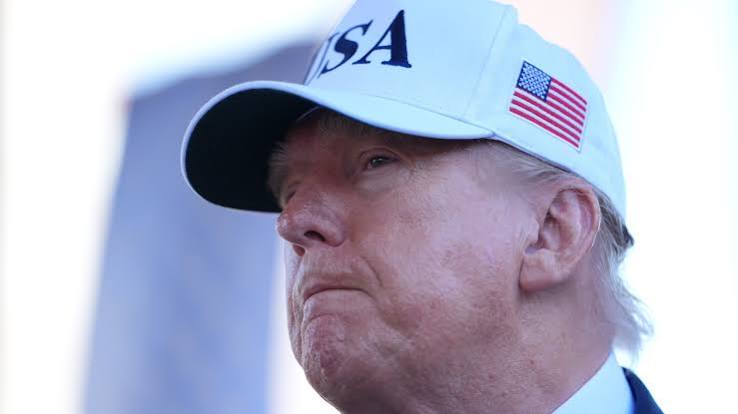
He’s down, but not quite out. Barring divine or other intervention, Donald Trump will remain in the Oval Office for a further two years and 10 weeks. Or, as the White House put it in a plaintive social media post brimming with neediness: “PSA [Public Service Announcement]: Trump is still your president.” But that’s not the only reason why the global celebrations that greeted the Democratic tidal wave that swept Republicans out of even their deepest heartlands should be tempered, if only a tad.
Don’t get me wrong, the results of Tuesday’s midterm elections are cause for genuine international jubilation. The defeats of
Trump allies in Serbia and Brazil were delicious appetisers, but this was the feast. No mere electoral setback in line with midterm tradition, this was a thorough repudiation of the second Trump presidency and of Trumpism. The 16% swing to Democrats in the popular vote for the House of Representatives was greater even than the 11.2% swing recorded in the Watergate midterms of November 1974, following the resignation in disgrace of Richard Nixon. Trump had worked hard for many months to undermine these elections, either by gerrymandering districts in his favour or preparing the ground for a later claim the vote was rigged, but to no avail: the democratic system proved too resilient, and the American public too determined to have their say. And have it they did, in a voice loud and clear.
Beyond the US, the temptation will be strong to see this as the moment the wheels came off the authoritarian, nationalist populist bandwagon that has rolled through so much of our politics this past decade. Viktor Orbán’s fall in April was pivotal, but the humiliation of Trump was always going to matter more. Thanks to the sheer might of the US, Trump has for a decade been the engine of the illiberal international. And now it is sputtering.
All that is cause for delight. But the risk is that those who have fought nationalist populism will take Tuesday’s success as their cue to relax. That would be to repeat the mistake made by Trump himself – and too many others – in November 2024, when he interpreted his win over Kamala Harris not as the cry of a public fed up with rising grocery bills and petrol prices, but as a permanent “vibe shift” in the culture and a mandate to turn the US into an autocracy, take a chainsaw to US government agencies, have masked men abduct and shoot American citizens on the streets, launch a doomed and disastrous war, and fill the US capital with monuments to his own vanity, all while lining his pockets and those of his inner circle.
The equivalent error this time, whether it’s made inside or outside the US, would be to read these midterm results as the end of the
Trump threat and as proof that normal service will resume shortly. The danger of Trumpism, sadly, will never be gone. Because if something can happen once, it can happen again. Trump was possible – which means another Trump is possible.
That is the lesson the US’s traditional allies, in Britain, the EU or elsewhere, need to internalise. Even if Capitol Hill will soon be in saner hands, even if Trump’s eventual successor is a good internationalist who believes in a rules-based order, the reliability of the US as an ally can never again be taken for granted. After Trump, the US’s status as a guarantor of western security is anything but guaranteed, contingent instead on this or that election result. Which means that the rest of the west must still plan for its own protection and defence.
Sure, nationalist populism is now badly damaged, marked as the cause of losers. What’s more, Trump may well have demonstrated that nationalist movements whose sole currency is grievance will ultimately always fail – thereby deterring voters in France and Germany tempted to vote for Marine Le Pen or the AfD.
But, again, it’s hard to rely on that. Did Trump fail because politicians of his ilk always will? Or was it because he made stupid and, crucially, avoidable decisions, such as attacking Iran – which not only broke his core pledge, so cherished by Maga voters, to end wars rather than start them, but also drove up the very inflation he was elected to curb? Either way, it’s hard to speak of inevitable failure when describing a man who, despite all the havoc he wreaked the first time around – including the violent insurrection of 6 January 2021 – was elected to a fresh term less than four years later. He disgraced himself, but was rewarded with victory.
Besides, it’s too soon to speak of Trump in the past tense. True, he’s lost the doormat House and the rubber-stamp Senate that enabled him to act without restraint. But a weakened Trump is not necessarily a tamed Trump. I think of the seasoned Washington hand who told me Trump in defeat could become “a cornered animal”. When it comes to the world stage, he still has the power to act – foreign policy is largely the preserve of the president – and a double motive to do so. First, he will want a legacy to offset this week’s historic drubbing and, second and even more elementally, he craves the attention. The notion of ceding the spotlight to Democrats, or in fact anyone, will appal him.
Maybe he will bow to the demands lodged by JD Vance – in a statement on X that saw the vice president all but break from his
boss – and move to end the war with Iran, even if that means capitulation. Or he might double down and push for the toppling of the Tehran regime that he likely believes would give him the place in history he deserves.
Until 20 January 2029 those decisions will be Trump’s. He still has the power to shape world events, even if that power has diminished. Take as just one example, the US relationship with Israel. That country had elections of its own last week that, though far from delivering the repudiation of Benjamin Netanyahu many Israelis sought, did wipe out his parliamentary majority. Coalition horsetrading is now under way, and the US midterms are already playing a part. Israeli opposition leaders argue that what Netanyahu long claimed as an asset – his closeness to Trump – is, after Tuesday, a liability, rendering Israel’s prime minister “toxic” among the Democrats who will soon wield power on Capitol Hill. If that argument prevails, the blue tsunami will have claimed not only Kansas and Texas, but the man once dubbed the Republican senator from Jerusalem.
On the morning of election day, Trump announced the termination of military aid to Israel, perhaps in a last-ditch attempt to win over Tucker Carlson Republicans who are hostile to the country. He could continue on that path, especially if he seeks to punish Netanyahu for his role in the joint US-Israeli war on Tehran that broke his presidency or, alternatively, he could defy Vance and hug the Israeli PM close.
The point is, these fateful choices still rest with Trump. Democrats will soon have the power to investigate allegations of corruption and hold him to account. America’s allies in Europe and elsewhere will soon find in Washington people who talk like partners, rather than enemies. Both prospects come as a great relief. But that does not alter two key facts: Trump happened – and he’s still there.


