
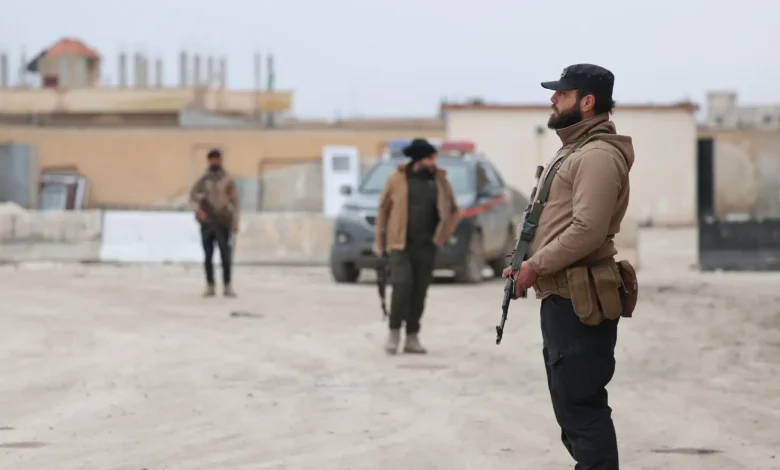
Damascus is under pressure to prove that it can protect minorities as they incorporate into the central state
Sirwan Kajjo – Responsible Statecraft:
This article, which originally appeared in Arab Digest, is republished with permission.
Last week, Syria’s Kurds entered a new stage in their struggle for political recognition. The Kurdish-led Syrian Democratic Forces (SDF) formally announced their dissolution as part of a complicated process of integration into the Syrian state. Shortly after the announcement, interim President Ahmed al-Sharaa appointed SDF commander Mazlum Abdi as a presidential adviser.
After more than a decade as a major military actor in the Syrian conflict, particularly in the fight against the Islamic State, the SDF’s dissolution marks a dramatic transition for Syria’s Kurds, shifting their struggle from the military arena to the political sphere.
But in Syria’s complex and fragile post-conflict transition, the reality is not as simple as it may appear from Damascus. The integration process, which began in January 2026, has been marked by distrust, tensions and occasional violence.
If anything, this suggests that the next stage will likely bring its own set of challenges.
Integrating the SDF and granting its leaders a degree of political power, at least at the local level, will not therefore, by itself, resolve the Kurdish question. Measures taken by the Syrian government such as recognising Kurdish as a national language, though not an official one, and granting citizenship to those who were stripped of it in 1962 are commendable steps, but they are certainly not enough to make Syria’s Kurds feel that they have a meaningful stake in the country’s national politics.
The deeper problem is that, despite Syria’s status as a transitional country, there is little evidence of a genuine political transition taking place. The developments surrounding the SDF should therefore not be viewed as part of a broader, inclusive political process. Rather, they are the product of several converging pressures: Damascus’ desire to recentralise power, Ankara’s insistence on the dissolution of the SDF and, most importantly, Washington’s preference to move away from its partnership with the SDF and redirect its support from northeastern Syria toward Damascus.
For Syria’s Kurds, their demands can broadly be divided into two categories. The first concerns their longstanding struggle for basic ethnic, cultural rights, and political representation. Historically, successive governments in Damascus deprived Syrian Kurds of fundamental rights, including by restricting their language, confiscating their lands and suppressing their cultural expression. The second category emerged during the Syrian war, when the Kurds established de facto self-rule across nearly one-third of Syria’s territory. This period allowed them to exercise governance for more than a decade with little to no effective authority from Damascus.
Before the Syrian conflict, Kurdish demands were largely centred on the first category. The experience of self-rule, however, has expanded those demands to include greater autonomy, self-government, and decentralisation. The SDF’s dissolution, and the resulting abandonment of its pursuit of a decentralised system, should therefore not be mistaken for an indication that Syrian Kurds no longer want these forms of governance. Nor should the SDF and its political affiliates be assumed to represent all segments of Kurdish society in Syria, estimated at roughly three million people.
Part of the Kurdish call for decentralisation in Syria is aimed at guaranteeing a meaningful degree of self-governance in Kurdish-majority areas. But decentralisation is not solely about securing special arrangements for the Kurds. It is also about ensuring that Syria as a whole does not return to the heavily centralised system that allowed successive governments in Damascus to suppress political freedoms, marginalise minorities, and concentrate power in the hands of the central government. For Syrian Kurds, therefore, decentralisation is both a means of protecting their own political gains and a broader safeguard against the return of authoritarian centralism.
This distinction is particularly important as Syria enters a new phase with the Kurds. Even if Damascus were to agree to address the Kurds’ domestic demands, including language rights, political representation, and cultural recognition, those gains would remain vulnerable if the broader political system continued to concentrate power in Damascus. Without meaningful political participation, institutional checks on executive power, and some form of decentralised governance, Kurdish rights could ultimately depend on the goodwill of the central government rather than being protected by durable political institutions.
The situation of other communities in Syria reinforces this concern. Damascus is not remotely close to resolving the case of the Druze in the south, where tensions between the central government and local actors remain unresolved. The Druze-majority of Swaida is effectively under siege.
The situation among the Alawites in the coastal region remains tense following the violence in March 2025. Meanwhile, Christians across the country continue to face occasional harassment and intimidation by armed groups affiliated with the government.
The challenges facing other minorities demonstrate that the question of political inclusion and power-sharing extends well beyond the Kurdish issue. Syria’s transition will ultimately have to address how different communities can exercise meaningful political agency while remaining part of a unified state.
In short, long-term security for the Kurds cannot be guaranteed solely through an agreement between Damascus and the SDF. Their gains will be sustainable only if Syria develops a political system in which power is dispersed, local communities have a meaningful voice in governance, and political rights are protected through a modern constitution, regardless of who controls the central government.


